What Are Gold Making Charges? Explained Simply
Making charges are an important part of jewellery pricing and can significantly affect the total amount you pay. Understanding how these charges work can help buyers make smarter purchasing decisions and avoid overpaying for jewellery.
In this article, let’s understand what gold making charges are, how they are calculated, why they vary, and how you can reduce unnecessary costs while buying gold jewellery.
What Are Gold Making Charges?
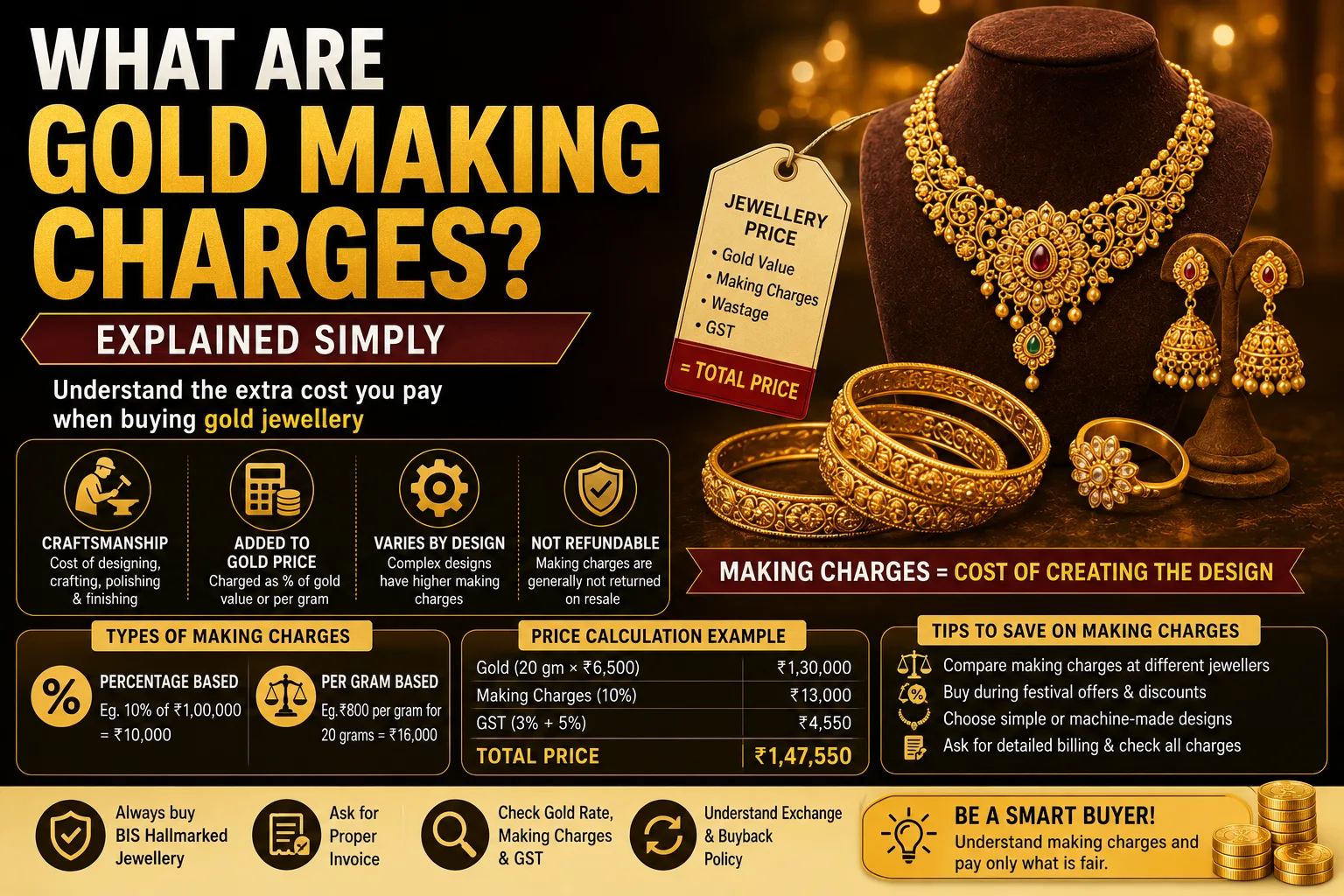
Gold making charges are the labour and craftsmanship costs involved in converting raw gold into finished jewellery.
Jewellers charge customers for:
- Designing
- Crafting
- Polishing
- Stone setting
- Handwork
- Manufacturing
In simple words:
Making charges are the cost of creating the jewellery design.
Even though gold itself has a market value, the effort required to turn it into jewellery adds additional charges.
Why Are Making Charges Added?
Gold jewellery is not sold as raw gold alone.
Jewellery involves:
- Skilled craftsmanship
- Detailed artistic work
- Machine work
- Manual finishing
- Design complexity
Complex jewellery pieces require more:
- Labour
- Time
- Skill
Therefore, jewellers include making charges to cover these production costs.
How Making Charges Are Calculated
Making charges are generally calculated in two common ways.
1. Percentage-Based Making Charges
Many jewellers charge a percentage of the gold value.
Example:
- Gold value = ₹1,00,000
- Making charges = 12%
Then:
- Making charge amount = ₹12,000
This method is very common in India.
2. Per Gram Making Charges
Some jewellers charge a fixed rate per gram.
Example:
- Jewellery weight = 20 grams
- Making charge = ₹800 per gram
Then:
- Total making charges = ₹16,000
This method is often used for:
- Simple jewellery
- Lightweight ornaments
- Machine-made designs
Why Making Charges Differ Between Jewellery
Making charges vary depending on the jewellery design and craftsmanship.
Simple Jewellery
Basic chains and rings usually have:
- Lower making charges
Heavy Bridal Jewellery
Complex bridal sets usually have:
- Higher making charges
This is because detailed handcrafted jewellery requires more labour and time.
Factors Affecting Gold Making Charges
Several factors influence making charges.
1. Jewellery Design Complexity
Intricate designs require:
- Skilled artisans
- More time
- Detailed craftsmanship
This increases charges.
Temple jewellery and antique jewellery often have higher making costs.
2. Handcrafted vs Machine-Made Jewellery
Handcrafted Jewellery
- Higher labour cost
- Unique designs
- Higher making charges
Machine-Made Jewellery
- Faster production
- Lower labour cost
- Lower making charges
Machine-made jewellery is usually more affordable.
3. Jewellery Brand
Popular jewellery brands may charge higher making charges because of:
- Brand reputation
- Premium designs
- Showroom costs
- Designer collections
Local jewellers may sometimes offer lower making charges.
4. Wedding Season Demand
During:
- Wedding seasons
- Festivals
- Akshaya Tritiya
- Diwali
making charges may increase due to high demand.
Some jewellers also launch special offers with reduced making charges during festive periods.
What Is Wastage Charge?
Many people confuse making charges with wastage charges.
Wastage Charges
Wastage refers to gold loss during jewellery manufacturing.
Jewellers may include:
- Melting loss
- Cutting loss
- Manufacturing wastage
This is usually charged separately from making charges.
GST on Gold Jewellery
Apart from gold value and making charges, buyers also pay GST.
Currently in India:
- 3% GST applies on gold value
- 5% GST applies on making charges
This further increases the final jewellery price.
Example of Full Gold Jewellery Price Calculation
Let’s understand with a simple example.
Suppose:
- Gold weight = 20 grams
- Gold rate = ₹6,500 per gram
Gold value:
20 × ₹6,500 = ₹1,30,000
Making charges:
10% of ₹1,30,000 = ₹13,000
GST:
- 3% on gold value = ₹3,900
- 5% on making charges = ₹650
Final price:
₹1,30,000 + ₹13,000 + ₹3,900 + ₹650
= ₹1,47,550
This example shows how making charges significantly affect the final jewellery cost.
Are Making Charges Refundable?
No. In most cases:
- Making charges are not refundable
When selling old jewellery:
- Buyers mainly pay for gold purity and weight
- Making charges are usually not recovered fully
This is why jewellery is not always ideal for pure investment purposes.
How to Reduce Gold Making Charges
1. Compare Multiple Jewellers
Different jewellers charge different rates.
Always compare:
- Gold rates
- Making charges
- Wastage charges
before purchasing.
2. Buy During Festival Offers
Many jewellery stores offer:
- Low making charge offers
- Zero making charge promotions
- Flat-rate discounts
during festivals and wedding seasons.
3. Choose Simple Designs
Simple jewellery designs usually have:
- Lower labour costs
- Lower making charges
Heavy designer jewellery often costs much more.
4. Ask for Detailed Billing
Always ask for:
- Separate gold value
- Separate making charges
- GST details
Transparent billing helps avoid hidden costs.
Which Jewellery Has Lower Making Charges?
Generally:
- Gold coins = Very low charges
- Plain chains = Lower charges
- Machine-made jewellery = Moderate charges
- Bridal jewellery = High charges
- Temple jewellery = Very high charges
Understanding this can help buyers plan purchases based on budget.
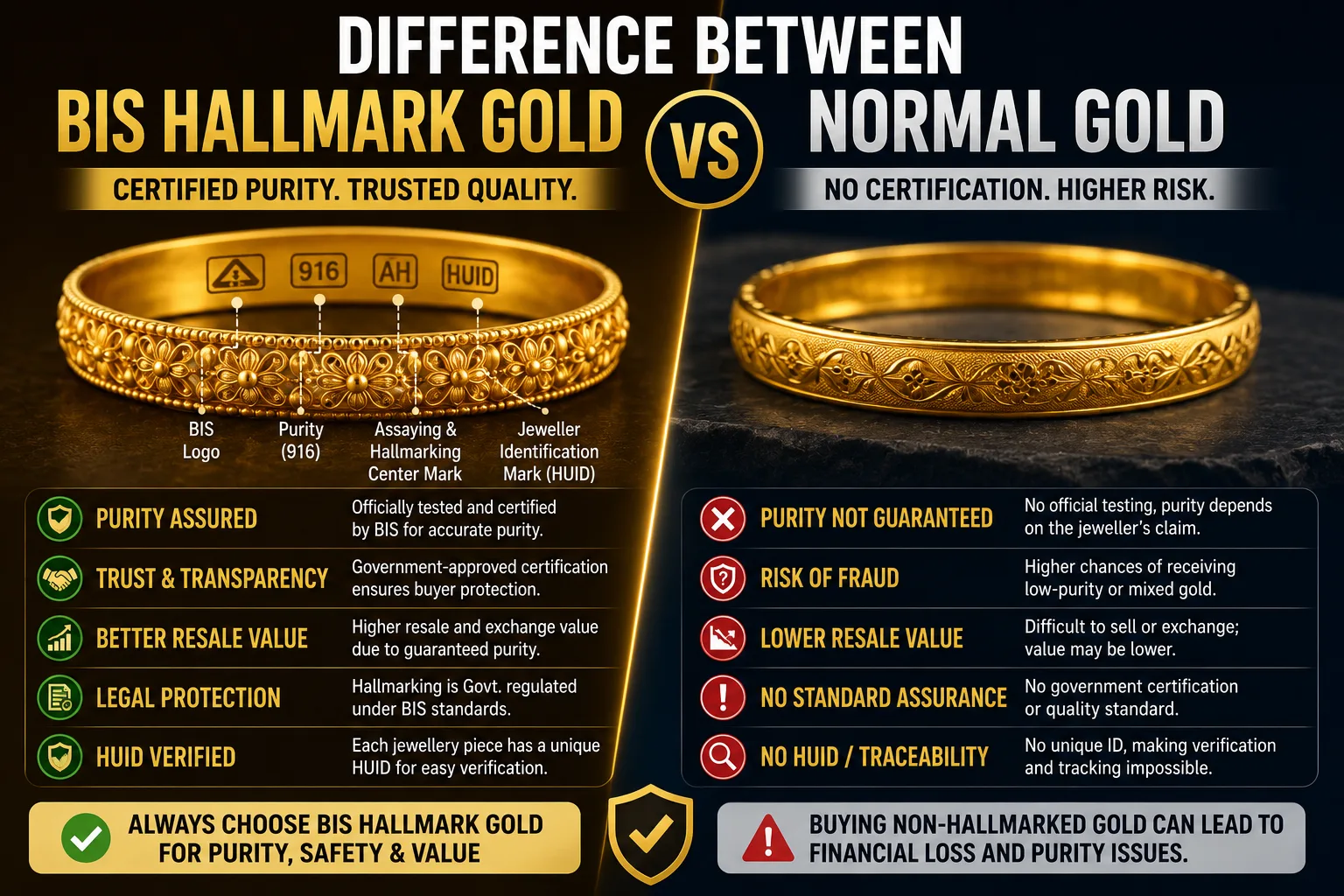
Why Hallmark Jewellery Matters
Always buy BIS hallmarked jewellery.
Hallmarked jewellery ensures:
- Purity verification
- Better resale value
- More transparency
Even if making charges are slightly higher, hallmarked jewellery provides better long-term safety.
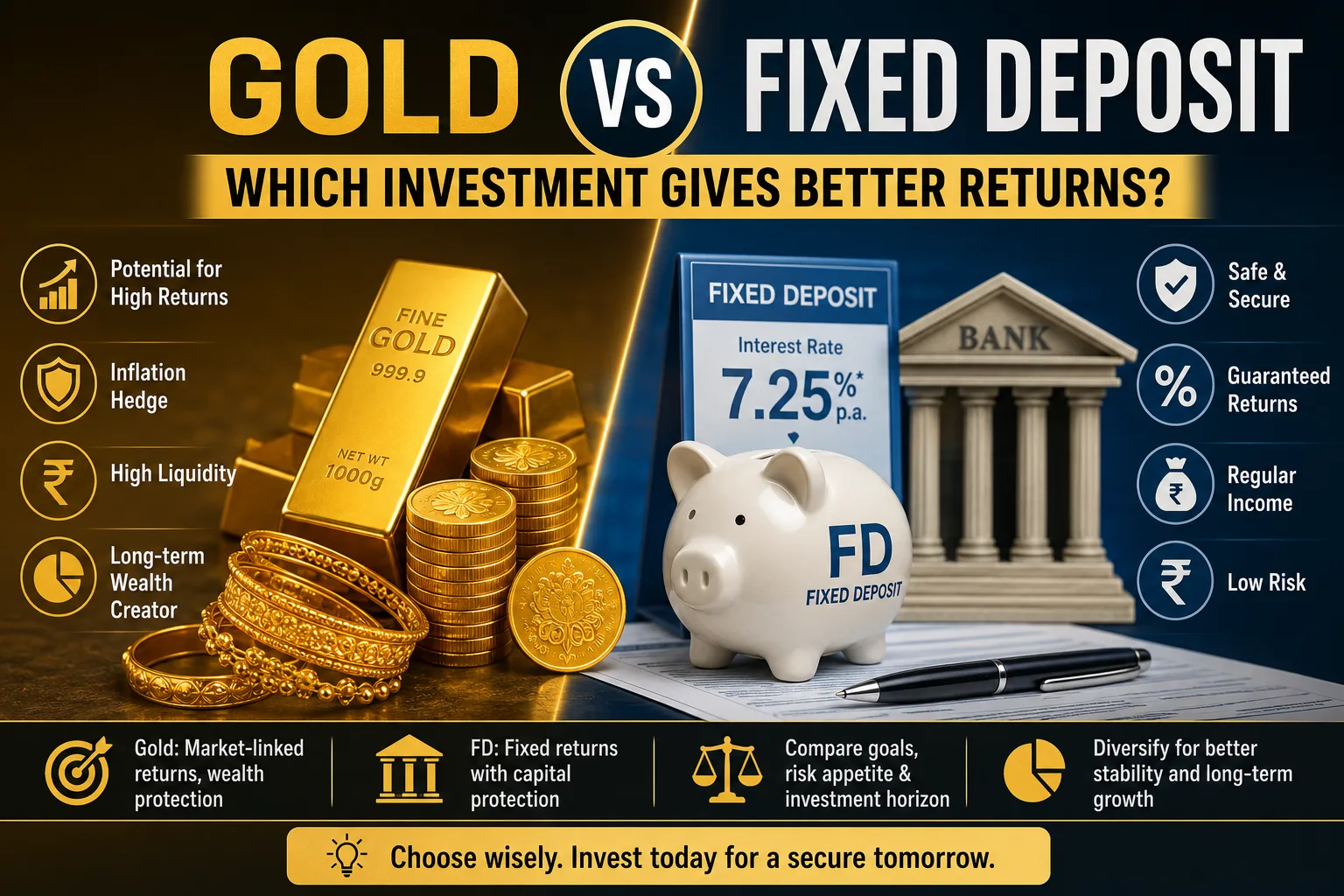
Gold Jewellery vs Gold Investment
For pure investment:
- Gold coins
- Digital gold
- Sovereign Gold Bonds
may be more cost-efficient because jewellery includes:
- Making charges
- Wastage
- GST
However, jewellery still remains important for:
- Weddings
- Traditions
- Personal use
- Emotional value
Can Making Charges Be Negotiated?
Yes, sometimes.
Especially:
- During festive offers
- For bulk purchases
- Wedding jewellery shopping
Some jewellers may reduce making charges.
Negotiation is more common with local jewellers than with large branded stores.
Things to Check Before Buying Jewellery
Before purchasing gold jewellery:
- Check today’s gold rate
- Verify BIS hallmark
- Compare making charges
- Understand wastage charges
- Ask for a proper invoice
- Clarify exchange policies
Careful comparison can save significant money.
Conclusion
Gold-making charges are the labour and craftsmanship costs added to the actual gold price while purchasing jewellery. These charges vary based on design complexity, brand, craftsmanship, and jewellery type.
Many buyers focus only on gold rates but forget that making charges can significantly increase the final price. Understanding how these charges work helps buyers make smarter purchasing decisions and compare jewellery prices more effectively.
Whether you are buying jewellery for weddings, investment, or personal use, always compare making charges, verify hallmark certification, and request transparent billing before making a purchase.
Check Live Gold Prices
Get today's gold rate for your city — updated throughout the day.
See Gold Price Calculator